
A practical guide to selecting ceramic and porcelain tiles by room, traffic, and style—so your investment lasts and looks great for years.
Choosing the right ceramic tiles can transform your space and add lasting value. Whether you're renovating a bathroom, updating a kitchen, or designing a statement floor, the right choice balances durability, aesthetics, and budget. Here's how to narrow down options and make a decision you'll be happy with for decades.
Consider the room and traffic High-traffic areas like entryways, kitchens, and living rooms need durable, slip-resistant options. Porcelain and vitrified tiles are ideal here—they're harder, less porous, and more resistant to scratches and stains. For walls and low-traffic areas, you have more flexibility with finishes and sizes. Bathroom walls can handle glossier finishes; feature walls are a great place to experiment with patterns and bold formats.
High-traffic areas like entryways, kitchens, and living rooms need durable, slip-resistant options. Porcelain and vitrified tiles are ideal here—they're harder, less porous, and more resistant to scratches and stains. For walls and low-traffic areas, you have more flexibility with finishes and sizes. Bathroom walls can handle glossier finishes; feature walls are a great place to experiment with patterns and bold formats.
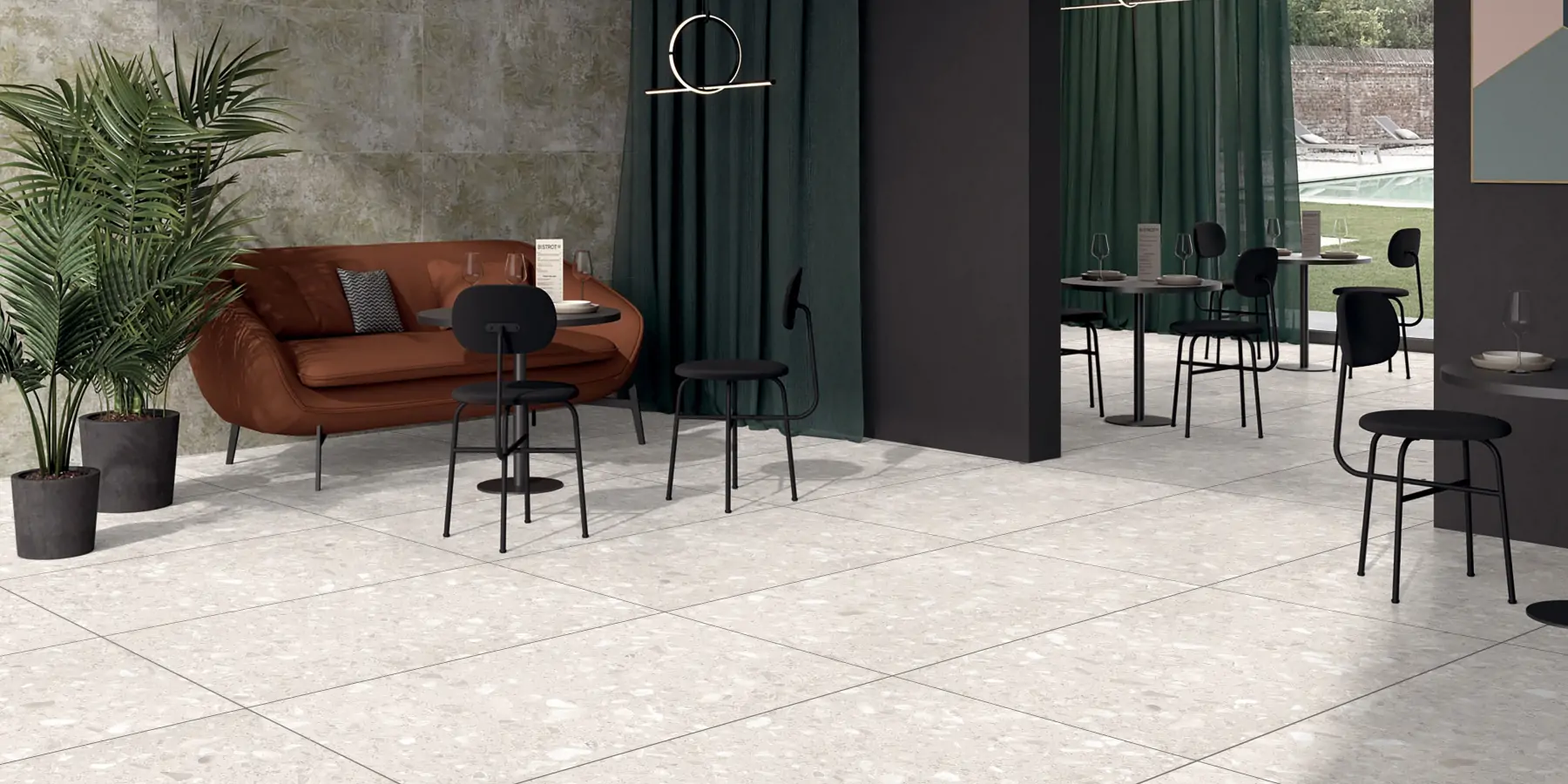
Think about size and layout Larger formats (e.g. 600×1200 mm or 800×1600 mm) create a seamless, modern look with fewer grout lines and a sense of openness. They work especially well in open-plan spaces and large bathrooms. Smaller formats (300×600 mm, 600×600 mm) work well for feature walls, classic patterns like herringbone, and spaces where you want more visual texture. Always consider the room dimensions—oversized tiles in a small room can look unbalanced, while small tiles in a large area can feel busy.
Larger formats (e.g. 600×1200 mm or 800×1600 mm) create a seamless, modern look with fewer grout lines and a sense of openness. They work especially well in open-plan spaces and large bathrooms. Smaller formats (300×600 mm, 600×600 mm) work well for feature walls, classic patterns like herringbone, and spaces where you want more visual texture. Always consider the room dimensions—oversized tiles in a small room can look unbalanced, while small tiles in a large area can feel busy.
Match finish to use Glossy tiles reflect light and suit bathrooms and feature walls where slip resistance is less critical. Matte and satin finishes are better for floors where grip and easy maintenance matter. Textured or structured surfaces add character and can improve slip resistance in wet areas. In kitchens, consider how the finish will look with spills and cleaning—matte often hides smudges better than high-gloss.
Glossy tiles reflect light and suit bathrooms and feature walls where slip resistance is less critical. Matte and satin finishes are better for floors where grip and easy maintenance matter. Textured or structured surfaces add character and can improve slip resistance in wet areas. In kitchens, consider how the finish will look with spills and cleaning—matte often hides smudges better than high-gloss.
Colour and pattern Neutral palettes (whites, greys, beiges) remain timeless and make spaces feel larger. Bold veining or concrete looks can become a focal point. If you're combining floor and wall tiles, keep a consistent tone or use the same tile in different formats for a cohesive look. Sample in your actual space: natural and artificial light will change how colours read.
Neutral palettes (whites, greys, beiges) remain timeless and make spaces feel larger. Bold veining or concrete looks can become a focal point. If you're combining floor and wall tiles, keep a consistent tone or use the same tile in different formats for a cohesive look. Sample in your actual space: natural and artificial light will change how colours read.
Order samples and view in your light Colour and texture can look different on a screen or in a showroom. Order physical samples and view them in the room where they'll be installed, at different times of day. Lay them flat and vertical if using on walls. This step alone can save you from costly regrets and ensures your investment looks exactly as you expect.
Colour and texture can look different on a screen or in a showroom. Order physical samples and view them in the room where they'll be installed, at different times of day. Lay them flat and vertical if using on walls. This step alone can save you from costly regrets and ensures your investment looks exactly as you expect.