
How to get the best look and performance from large-format porcelain and ceramic tiles in your next project.
Large-format tiles (600×1200 mm, 800×1600 mm, and beyond) are a staple of modern interiors. They create a seamless, elevated look with fewer grout lines—but they demand careful planning and installation. Here's how to specify and use them successfully.
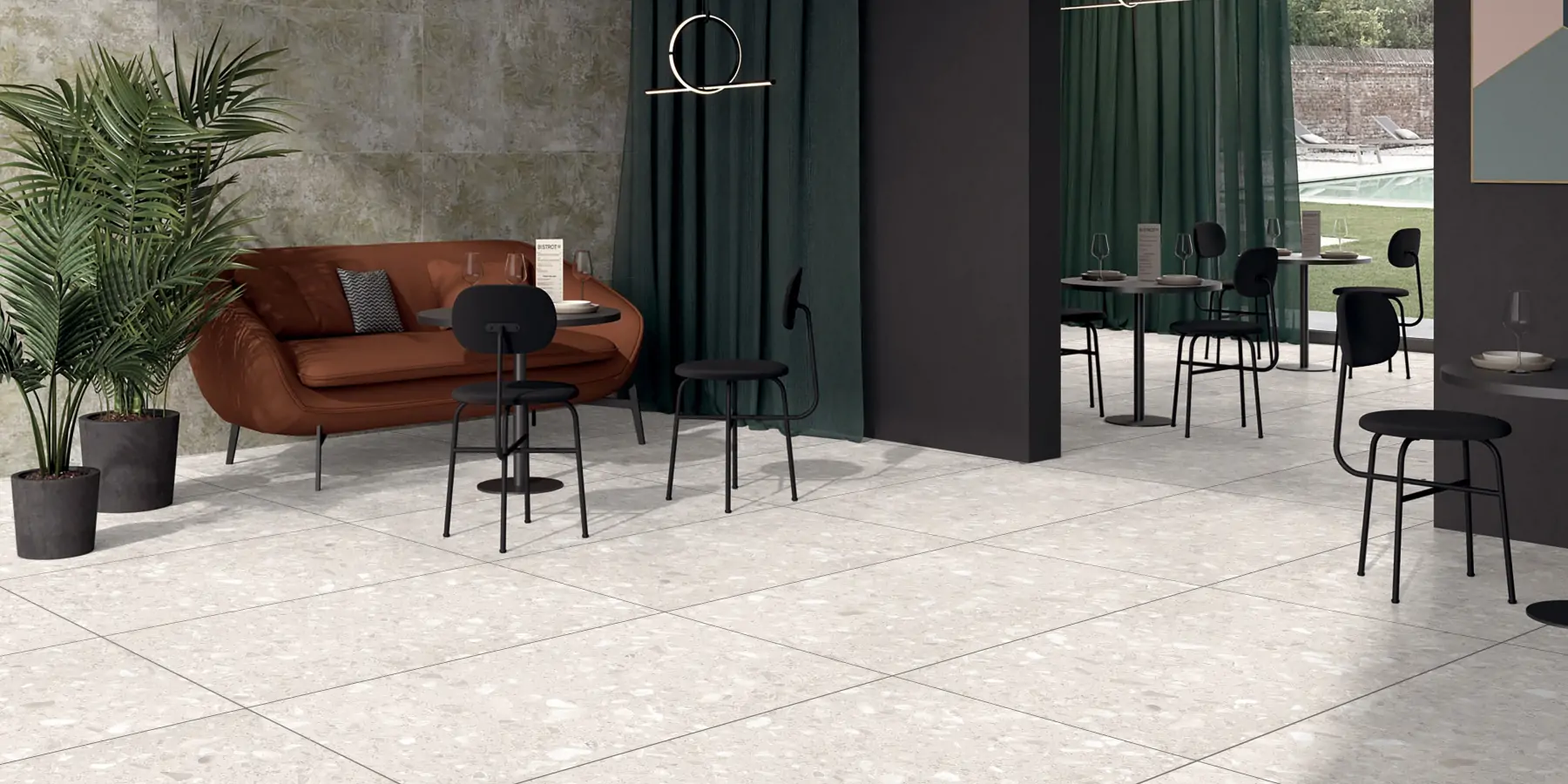
Why go large Large formats make spaces feel bigger and calmer. Fewer joints mean less visual noise and easier cleaning. They're especially effective in open-plan areas, master bathrooms, and commercial lobbies. The same tile in a large format feels more contemporary than in a smaller size.
Large formats make spaces feel bigger and calmer. Fewer joints mean less visual noise and easier cleaning. They're especially effective in open-plan areas, master bathrooms, and commercial lobbies. The same tile in a large format feels more contemporary than in a smaller size.
Substrate and preparation Large tiles need a flat, stable substrate. Any deviation in the floor or wall will cause lippage or cracking. Use a suitable levelling compound on floors and ensure walls are plumb and flat. For floors, check deflection limits—large tiles are less forgiving of movement. Your installer should use the correct adhesive (often a flexible, large-format type) and back-butter tiles for full coverage.
Large tiles need a flat, stable substrate. Any deviation in the floor or wall will cause lippage or cracking. Use a suitable levelling compound on floors and ensure walls are plumb and flat. For floors, check deflection limits—large tiles are less forgiving of movement. Your installer should use the correct adhesive (often a flexible, large-format type) and back-butter tiles for full coverage.
Layout and pattern Plan the layout before you start. Avoid narrow cuts at edges; centre the pattern or use a balanced layout. Consider the direction of laying: length along the room often elongates the space. For feature walls, book-matching or vein-matching can create a dramatic effect with marble-look or stone-look tiles.
Plan the layout before you start. Avoid narrow cuts at edges; centre the pattern or use a balanced layout. Consider the direction of laying: length along the room often elongates the space. For feature walls, book-matching or vein-matching can create a dramatic effect with marble-look or stone-look tiles.
Grout and maintenance Use a flexible, stain-resistant grout in a colour that complements the tile. Matching or near-matching grout keeps the focus on the tile. Once installed and sealed (if required), large-format surfaces are easy to maintain with routine sweeping and damp mopping.
Use a flexible, stain-resistant grout in a colour that complements the tile. Matching or near-matching grout keeps the focus on the tile. Once installed and sealed (if required), large-format surfaces are easy to maintain with routine sweeping and damp mopping.